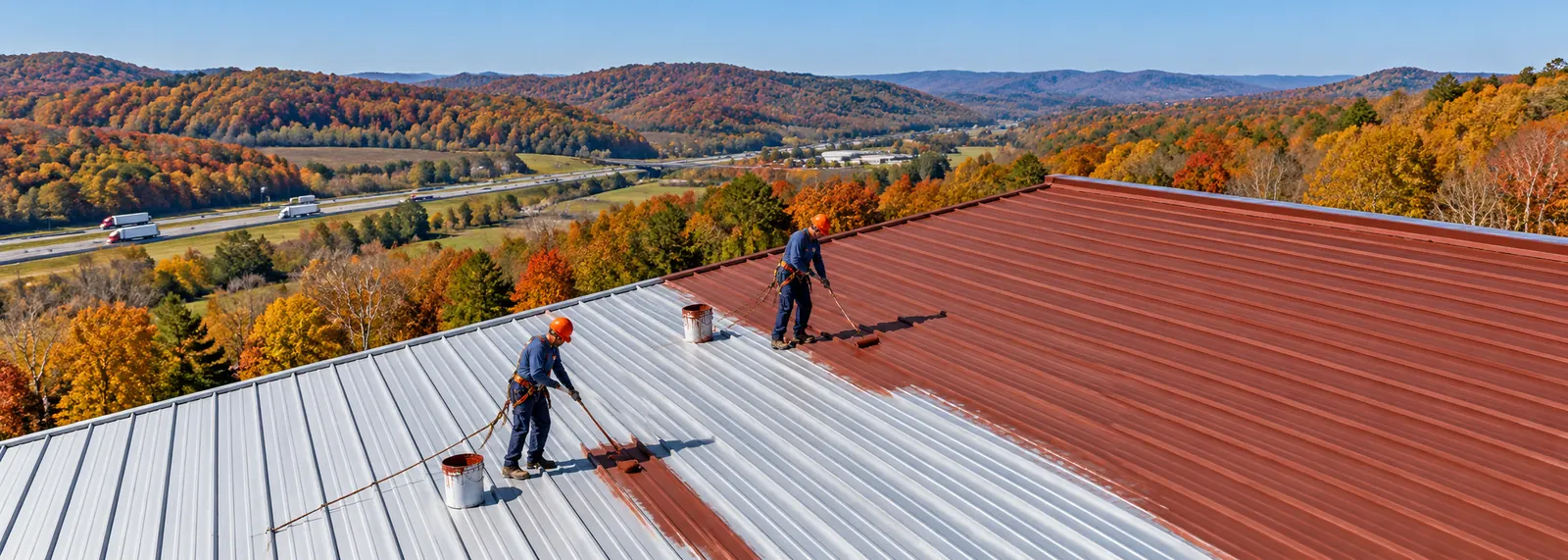
Metal Roof Coating
Built for exposed-fastener R-panel and standing seam roofs with surface rust, leaking laps, and loose screws. Rust treatment, fabric, and base and top coats cover the whole roof.
Metal Roof Coating in Elizabethtown →
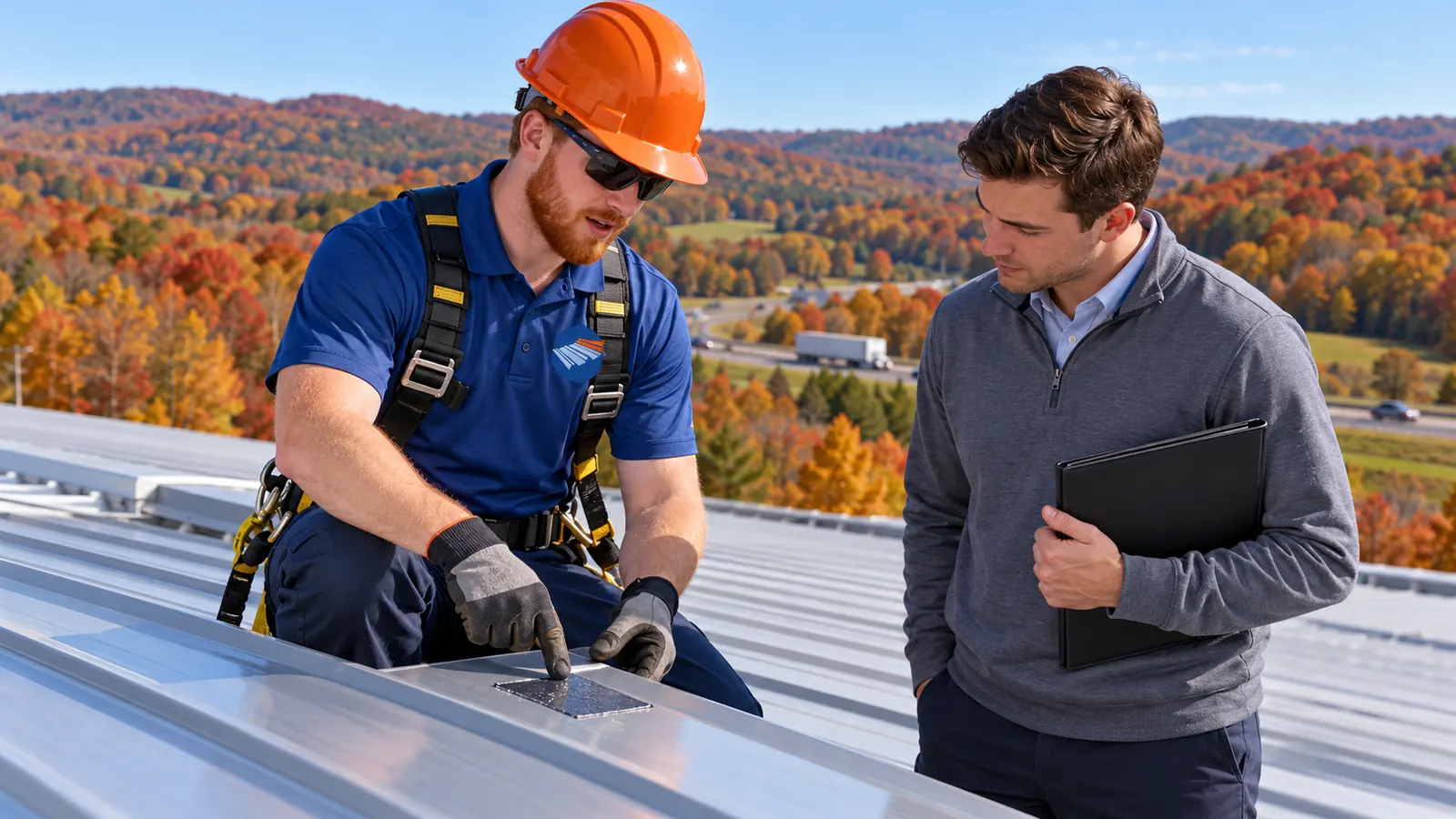
We coat commercial metal roofs in Elizabethtown, KY. Each job starts with a walk across your panels, then every screw and lap gets sealed before the coats go on.
Most leaks on a metal building start at a handful of joints. These are the zones we check on every Elizabethtown roof walk, from the eave up to the ridge.
Gutter seams split after freeze and thaw, and rust blooms along eave trim where water sits. We clean the trough, prime the rust spots, and set fabric and coating over each seam and end cap.
Long panel runs grow in afternoon sun and shrink overnight, working the end laps open. Rain running down the slope follows that joint inside, so fabric in base coat spreads the movement over a wider band.
Ridge caps lose sealant at their foam closures, and their stitch screws back out early because wind hits them hardest. Caps get tightened, their joints reinforced, and closures checked before coating.
Translucent panels crack, and pipe boots and curb corners open where another material meets the steel. Each one gets its own detail with sealer and fabric, because a field coat runs thin at those edges.
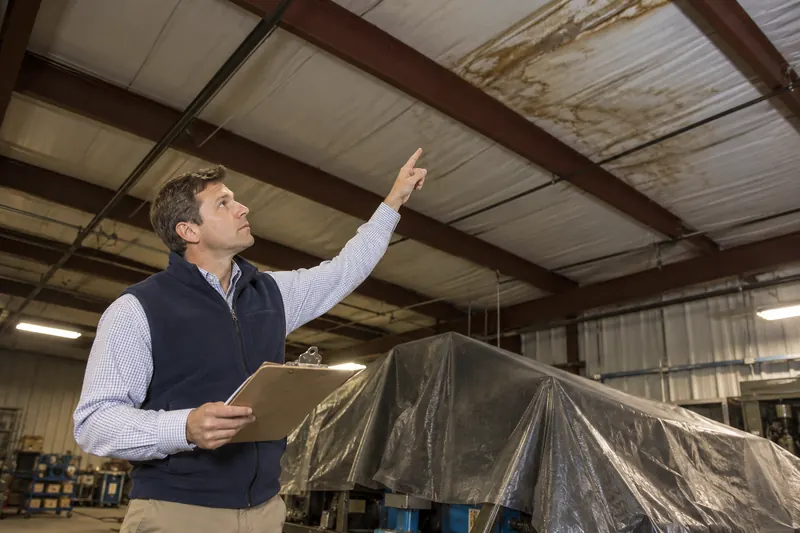
Inside the building, stained insulation and rusty purlins show where water has been getting through for years. That view from below tells us whether framing repairs come before any coating.
We install five coating systems on commercial roofs around Elizabethtown. Each tile names the roofs that system suits best.
Built for exposed-fastener R-panel and standing seam roofs with surface rust, leaking laps, and loose screws. Rust treatment, fabric, and base and top coats cover the whole roof.
Metal Roof Coating in Elizabethtown →
Picks up where water lingers: low-slope metal, gutter lines, and the uphill side of curbs. It holds up under standing water, and later recoats need silicone again.
Silicone Roof Coating in Elizabethtown →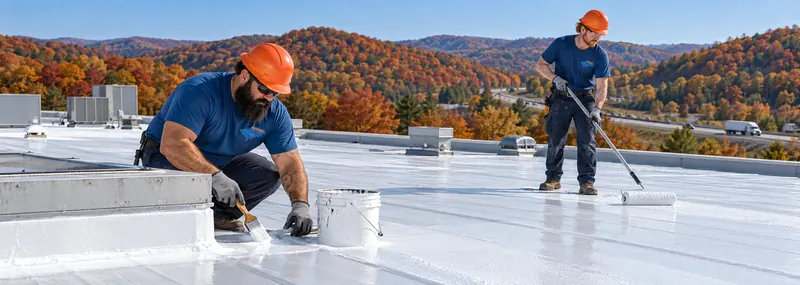
Water-based and bright white, made for pitched panels that drain within hours of a storm. Acrylic cures as its water evaporates, so it goes on during warm, dry stretches.
Acrylic Roof Coating in Elizabethtown →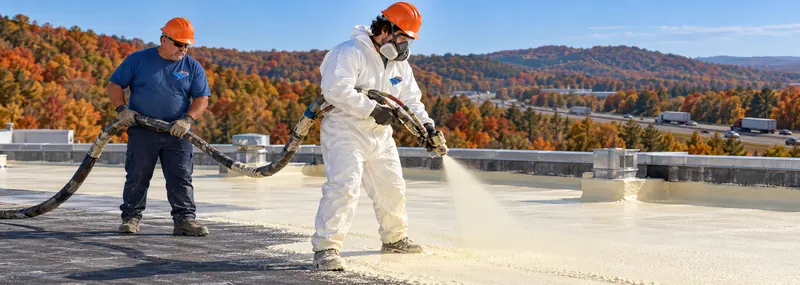
Closed-cell foam sprayed over the panels buries hundreds of screws and laps under one insulated layer, then takes a coating on top. Uninsulated shops and warehouses that sweat are the usual fit.
Spray Foam Roofing in Elizabethtown →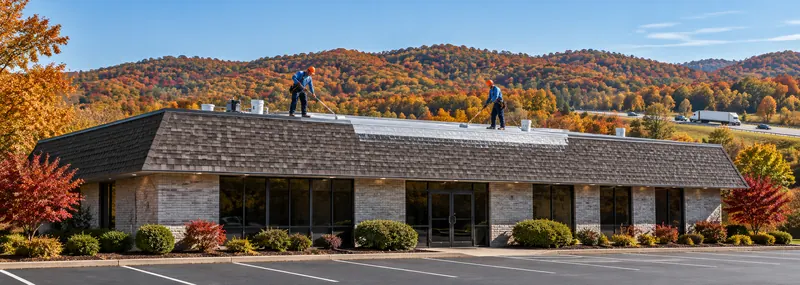
Mansards, entry canopies, and steep sections on strip centers and churches qualify when the shingles lie flat, keep their granules, and the coating maker approves the product.
Shingle Roof Coating in Elizabethtown →We coat warehouses, plants, shops, and church halls around Elizabethtown. The gains below hold when the panels are still fastened down and mostly solid.
Coating panels that are still fastened down can cost less than stripping the roof and installing new steel. The old panels stay on the building and out of the landfill.
Work happens on top of the panels, and the roof is never opened to the weather. Forklifts, shifts, and services underneath keep running while we stage around docks and air intakes.
A white top coat reflects sunlight, so the panels run cooler on July afternoons. The DOE Guide to Cool Roofs ties that to less heat moving into air-conditioned space under the deck.
When the top coat wears thin, a cleaning and a fresh coat of the same product renew the surface over the same seams and screws. Silicone takes silicone, and acrylic takes acrylic.
Call us and say where the drip lands and what the weather was doing. A drip after rain points to a lap or screw; one on cold mornings can be condensation.
The amount of solid steel left on the roof decides the job. We check it from the top of the panels and from inside the building.
| Path | What You See | What Happens First | Where Coating Fits |
|---|---|---|---|
| Coat | Rust bloom around screw heads, drips at end laps, chalky factory paint | Rust cleaned and primed, stripped screws swapped, fabric at the laps | Base and top coat across the whole roof |
| Restore | Scattered pinholes and a few cracked skylight panels | Bad panels and skylights swapped, then the same prep | Full coating once the swaps are done |
| Re-Panel | Rust-through along whole panel runs | Failed panels removed, framing kept | Coating on the runs that stay |
| Replace | Purlins sagging between frames, rust across the roof | Framing repairs and a new roof | Held until the new roof is on |
Four stages, in this order, on every metal roof we coat. You see the photos and the work order before anything is cleaned or coated.
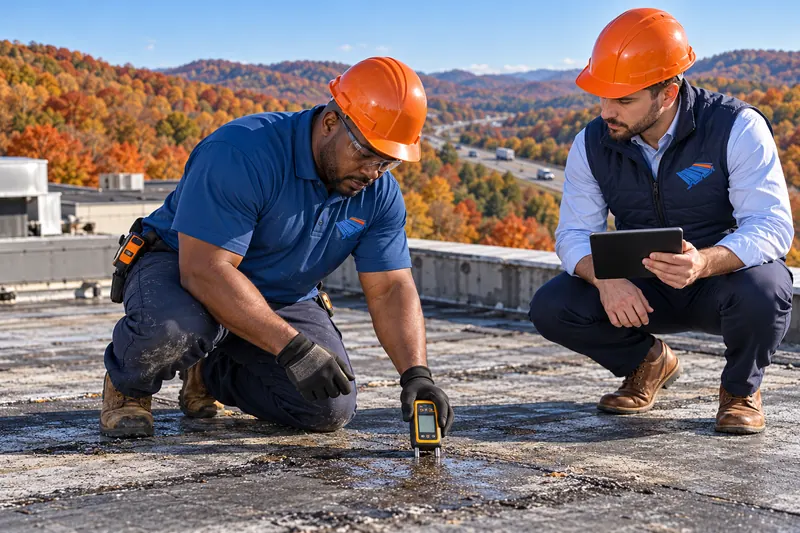
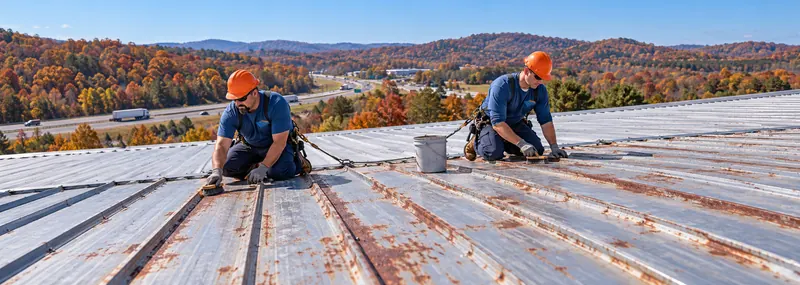
We walk the panels, count loose screws, mark rust, and check laps, ridge caps, gutters, and skylights. Then we look at the underside from inside for daylight at laps and stained insulation.
Holes get patched or panels swapped, stripped screws get larger replacements, and the roof is power washed with a cleaner the coating maker approves, then rinsed clear of any film.
Rusted, galvanized, or bare steel gets the primer listed for it. Laps get polyester fabric or seam tape set in base coat, and every screw head gets a cap of sealant.
Base coat goes across the panels, then the top coat once the base has cured. Film thickness gets checked with a gauge as we go, and the ridge, gutters, and curbs get a last walk.
Is your building near Elizabethtown? We coat commercial roofs here and in the four towns below. Somewhere else? Call us or send us a message.
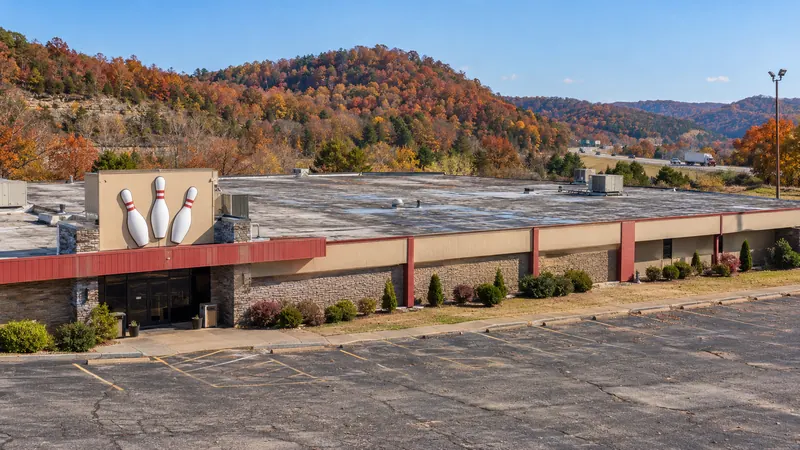
Plants and shops with uninsulated metal roofs and translucent skylight panels, where sweating steel and real leaks get mixed up.
Farm-supply stores, equipment shops, and brick buildings on the public square with low-slope roofs behind parapets.
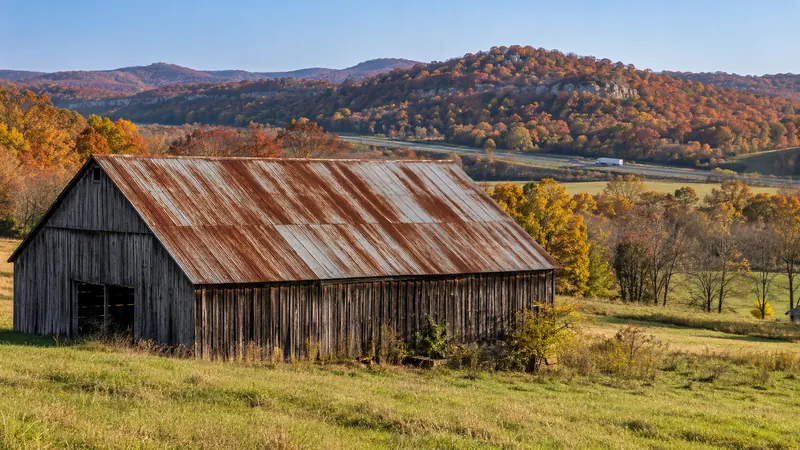
Older barns and sheds now used as shops and storage, many still sitting on wood purlins.
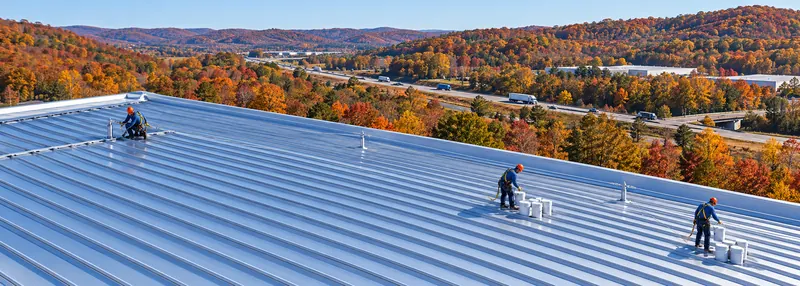
Shops, farm buildings, and church halls on open ground, often with standing seam and screw-down roofs on one property.
Short answers about coating metal roofs in Elizabethtown. Every owner question we have answered sits on our metal roof coating FAQ.
It turns hundreds of separate joints into one continuous rubbery layer. Screws, laps, and panel faces sit under the same film, so rain has no open seam to follow. The coating goes on wet, cures in place, and a white finish keeps the steel cooler in summer.
Gravity and movement both work on those joints. Rain running downslope meets the end lap head-on, daily expansion keeps prying it open, and side laps loosen as stitch screws back out. We tighten those screws, then set fabric or seam tape over each lap in base coat.
Eight stages, always in the same order. Inspection comes first, then repairs, power washing, primer on rusted or galvanized steel, fabric at the laps with every screw capped, a base coat, a top coat, and a last walk past ridge caps, gutters, and curbs.
Square footage, the amount of rust, and the count of screws and laps to seal move the price most. A clean standing seam roof takes far less labor than a rusty screw-down roof, and panel swaps, skylights, spray foam, building height, and lift access all add to the measured scope.
End laps, screws, and eave gutters give out first on those long exposed-fastener roofs. Runs that long move a lot between hot afternoons and cold nights, so laps open and screws back out along the purlin lines. The steel itself is usually still solid, which makes fabric at every lap and a white top coat a strong fit.
With a walk across the panels and a look at their underside from inside your building. On top we check screws, laps, ridge caps, gutters, and skylight panels; inside we look for daylight at laps and stains on the insulation. You get photos and a written scope before any cleaning starts.
Tell us about the building and the leaks. We walk the roof, photograph what we find, and put the coating plan in writing.
Leave a name and number, and we will call to talk through the leaks, rust, or coating question on your building.
Or call (270) 236-5261 now